
Losing several or all of your natural teeth can affect more than your smile. It can make eating difficult, change the way you speak, and reduce your confidence in social situations. Fortunately, modern dentistry offers several tooth replacement options to restore your smile and improve everyday comfort.
Two common solutions are traditional dentures and implant-supported dentures. Both can replace missing teeth, but they differ in how they stay in place, how they feel, and how they support your oral health.
If you are researching dentures in Newark, DE, understanding these differences can help you make an informed decision. This guide compares implant-supported dentures and traditional dentures, including their benefits, limitations, costs, and suitability for different patients.
What Are Traditional Dentures?
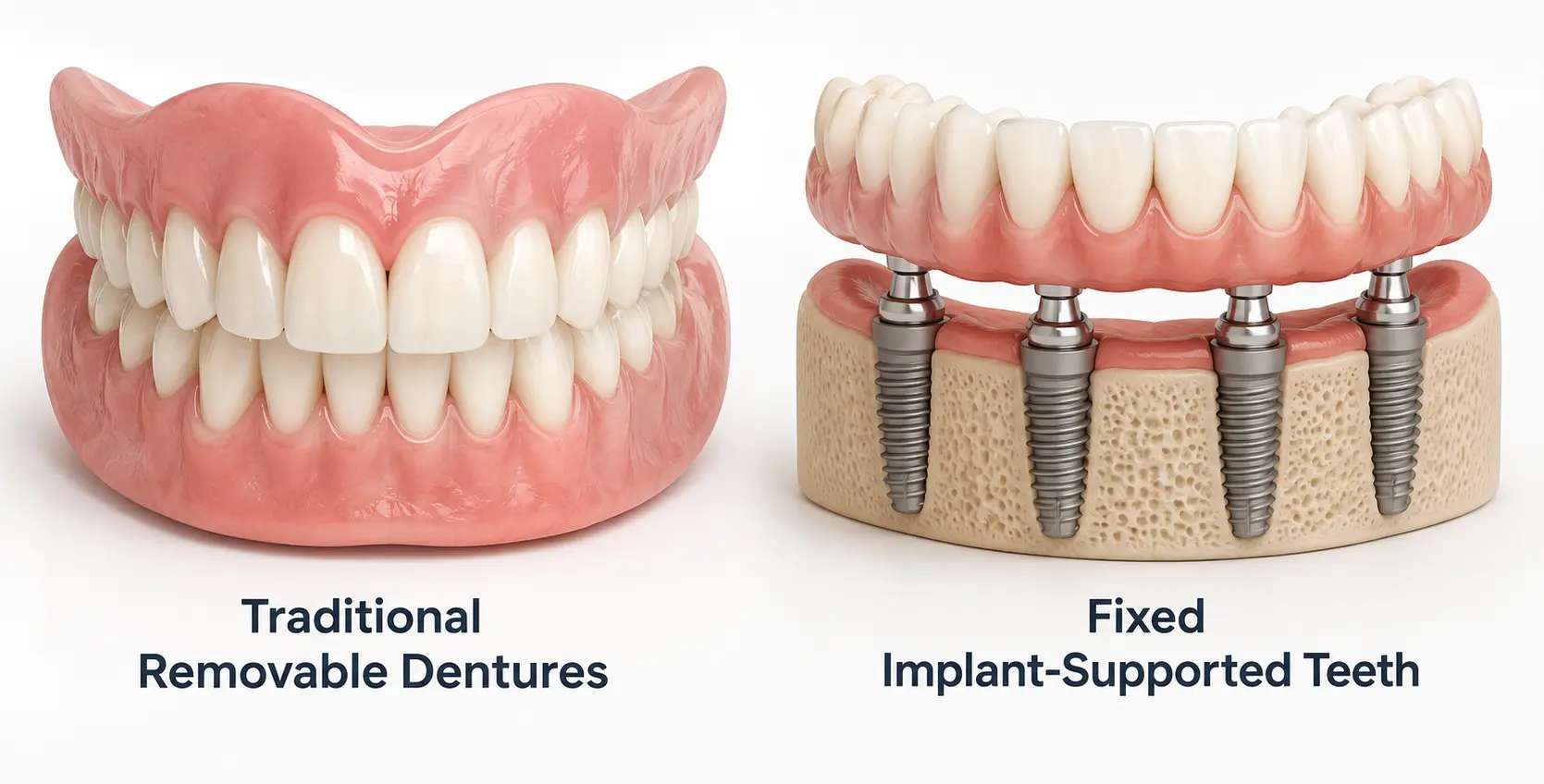
Traditional dentures are removable dental appliances designed to replace multiple missing teeth or an entire arch of teeth. They are custom-made to fit your mouth and restore the appearance and basic function of natural teeth.
Complete dentures replace all the teeth in the upper or lower jaw, while partial dentures replace several missing teeth when some natural teeth remain.
Traditional dentures generally stay in place through natural suction, the shape of your gums and jaw, and sometimes denture adhesive.
Benefits of traditional dentures include:
- Lower initial cost compared with implant-supported options.
- No surgical implant placement required.
- Custom-made to match your facial features and smile.
- Removable for cleaning and maintenance.
- Suitable for many patients who have lost most or all of their teeth.
However, traditional dentures can sometimes move while eating or speaking. Changes in the jawbone and gum tissue may also affect their fit over time, requiring adjustments or replacement.
What Are Implant-Supported Dentures?
Implant-supported dentures use dental implants to provide additional stability. Dental implants are small titanium or other biocompatible posts placed into the jawbone, where they integrate with the bone during healing.
Once the implants have healed sufficiently, a custom denture is attached to them using a specialized connection system.
Unlike traditional dentures, which rest primarily on the gums, implant-supported dentures receive support from dental implants.
There are two common types:
Removable implant-supported dentures: These attach to implants using special connectors but can be removed by the patient for cleaning.
Fixed implant-supported dentures: These are secured to dental implants and are generally removed only by a dental professional.
The number of implants required depends on the type of restoration, jaw anatomy, and treatment plan.
Implant-Supported Dentures vs. Traditional Dentures: Key Differences
Although both options replace missing teeth, they offer different experiences.
| Feature | Traditional dentures | Implant-supported dentures |
| Stability | Rest on gums and may move | Anchored to dental implants |
| Removability | Removable | Removable or fixed |
| Initial cost | Usually lower | Usually higher |
| Surgery | Not required | Implant surgery required |
| Chewing ability | May be more limited | Often provides better stability |
| Jawbone support | Does not prevent bone loss | Helps preserve bone around implants |
| Maintenance | Daily removal and cleaning | Cleaning depends on design |
| Treatment time | Often shorter | Usually longer due to healing |
Your dentist can explain which option is appropriate based on your oral health, preferences, and budget.
1. Comfort and Stability
One of the biggest differences between these options is how securely they stay in place.
Traditional dentures rest on the gums. Even when properly fitted, they may shift during chewing, laughing, or speaking. Some patients also experience sore spots or irritation, particularly when first adjusting to their dentures.
Implant-supported dentures are attached to dental implants, which provide additional stability. This can reduce unwanted movement and make everyday activities more comfortable.
For patients who struggle with loose dentures, implant-supported options may offer a significant improvement.
2. Eating and Chewing Ability
Missing teeth can make it difficult to enjoy certain foods. Traditional dentures restore some chewing ability, but patients may need to avoid hard, sticky, or particularly chewy foods.
Because implant-supported dentures are more stable, many patients find it easier to bite and chew a wider range of foods.
However, neither option completely replicates natural teeth. Your dentist will provide guidance about foods to avoid and how to protect your restoration.
3. Jawbone Health and Facial Structure
Your jawbone needs stimulation from natural tooth roots to help maintain its structure. After tooth loss, the bone in the affected area gradually begins to shrink because it no longer receives the same stimulation.
Traditional dentures sit on top of the gums and do not replace tooth roots. As the jawbone changes, dentures may become loose and require relining or replacement.
Dental implants provide stimulation to the surrounding jawbone through functional forces. They can help preserve bone around the implant sites and reduce the effects of bone loss in those areas.
However, implants do not prevent bone loss throughout the entire jaw.
4. Cost of Treatment
Cost is an important consideration when choosing between traditional and implant-supported dentures.
Traditional dentures generally have a lower initial cost because they do not require implant surgery or implant components.
Implant-supported dentures usually cost more because treatment may involve:
- Dental implant placement.
- Surgical planning and imaging.
- Abutments or attachment components.
- Custom denture fabrication.
- Follow-up appointments.
- Additional procedures, such as bone grafting, when necessary.
The total cost varies depending on the number of implants, type of denture, materials, and individual treatment requirements.
If you are comparing the cost of dentures in Newark, DE, ask your dentist for a detailed estimate that includes every stage of treatment. A lower initial price does not always mean lower long-term expenses.
5. Treatment Process and Recovery Time
Traditional dentures generally involve fewer treatment stages. Your dentist examines your mouth, takes impressions or digital scans, and arranges for your dentures to be fabricated and fitted.
Some patients need tooth extractions before receiving their dentures. Depending on the situation, immediate dentures may be provided after extraction, followed by adjustments as the gums heal.
Implant-supported dentures require a more involved process:
- Consultation: Your dentist evaluates your oral health, jawbone, and suitability for implants.
- Treatment planning: Imaging may be used to determine implant positions.
- Implant placement: The implants are surgically placed in the jawbone.
- Healing: The implants need time to integrate with the surrounding bone.
- Denture attachment: Once healing is sufficient, the custom denture is attached to the implants.
- Follow-up: Your dentist checks the fit, bite, and condition of the restoration.
The overall timeline varies. Some patients may require additional procedures or a longer healing period before receiving their final dentures.
6. Maintenance and Long-Term Care
Both types of dentures require consistent cleaning and professional dental care.
Traditional dentures should be removed and cleaned daily. Your dentist may recommend soaking them in an appropriate denture-cleaning solution. You should also clean your gums, tongue, and any remaining natural teeth.
Implant-supported dentures require careful cleaning around the implants and attachment components. Removable designs can be taken out for cleaning, while fixed designs require specific cleaning techniques around and underneath the restoration.
Regular dental checkups are important for both options. Your dentist can monitor your gums, check the condition of your dentures, and identify problems before they become more serious.
Who Is a Good Candidate for Each Option?
Traditional dentures may be suitable if you:
- Want a lower-cost tooth replacement option.
- Prefer to avoid implant surgery.
- Have medical or anatomical factors that make implants unsuitable.
- Need a removable solution.
- Want to replace several or all missing teeth.
Implant-supported dentures may be suitable if you:
- Want greater denture stability.
- Have difficulty keeping traditional dentures in place.
- Want improved chewing function.
- Have sufficient jawbone to support implants or are eligible for bone grafting.
- Are healthy enough for the required surgical procedure.
Not everyone is automatically eligible for dental implants. Factors such as bone volume, gum health, smoking, medical conditions, and certain medications can affect treatment suitability.
A dental examination is necessary to determine the best option.
Frequently Asked Questions
1. Are implant-supported dentures better than traditional dentures?
Implant-supported dentures generally provide greater stability and can improve chewing function. However, traditional dentures are more affordable initially and do not require implant surgery. The better option depends on your needs, health, and budget.
2. Can implant-supported dentures be removed?
Yes. Some implant-supported dentures are designed to be removable by the patient. Fixed implant-supported dentures, on the other hand, are secured in place and generally require a dental professional for removal.
3. How long do implant-supported dentures last?
Their lifespan varies depending on the materials, maintenance, and oral health. The denture itself may need repair or replacement over time, while properly maintained implants can last many years.
4. Do implant-supported dentures prevent jawbone loss?
Dental implants help preserve bone around the implant sites by transferring functional forces to the jawbone. However, they do not prevent bone loss in areas without implants.
5. Are implant-supported dentures painful?
Implant placement is performed using anesthesia, so patients should not feel pain during the procedure. Some soreness, swelling, and discomfort are common afterward and can usually be managed with the dentist’s instructions.
6. Can I switch from traditional dentures to implant-supported dentures?
Often, yes. Patients who currently wear traditional dentures may be candidates for implant-supported dentures. Your dentist will evaluate your jawbone, gums, and overall health before recommending treatment.
Final Thoughts: Which Denture Option Should You Choose?
Both traditional dentures and implant-supported dentures can restore your smile, improve appearance, and help you manage missing teeth. Traditional dentures offer an accessible, non-surgical solution, while implant-supported dentures provide additional stability and support.
The right choice depends on your oral health, lifestyle, treatment expectations, and financial considerations.
If you are considering dentures in Newark, DE, Chapel Street Dentistry can help you understand your tooth replacement options. Schedule a consultation to discuss your concerns, evaluate your oral health, and develop a treatment plan that fits your needs.